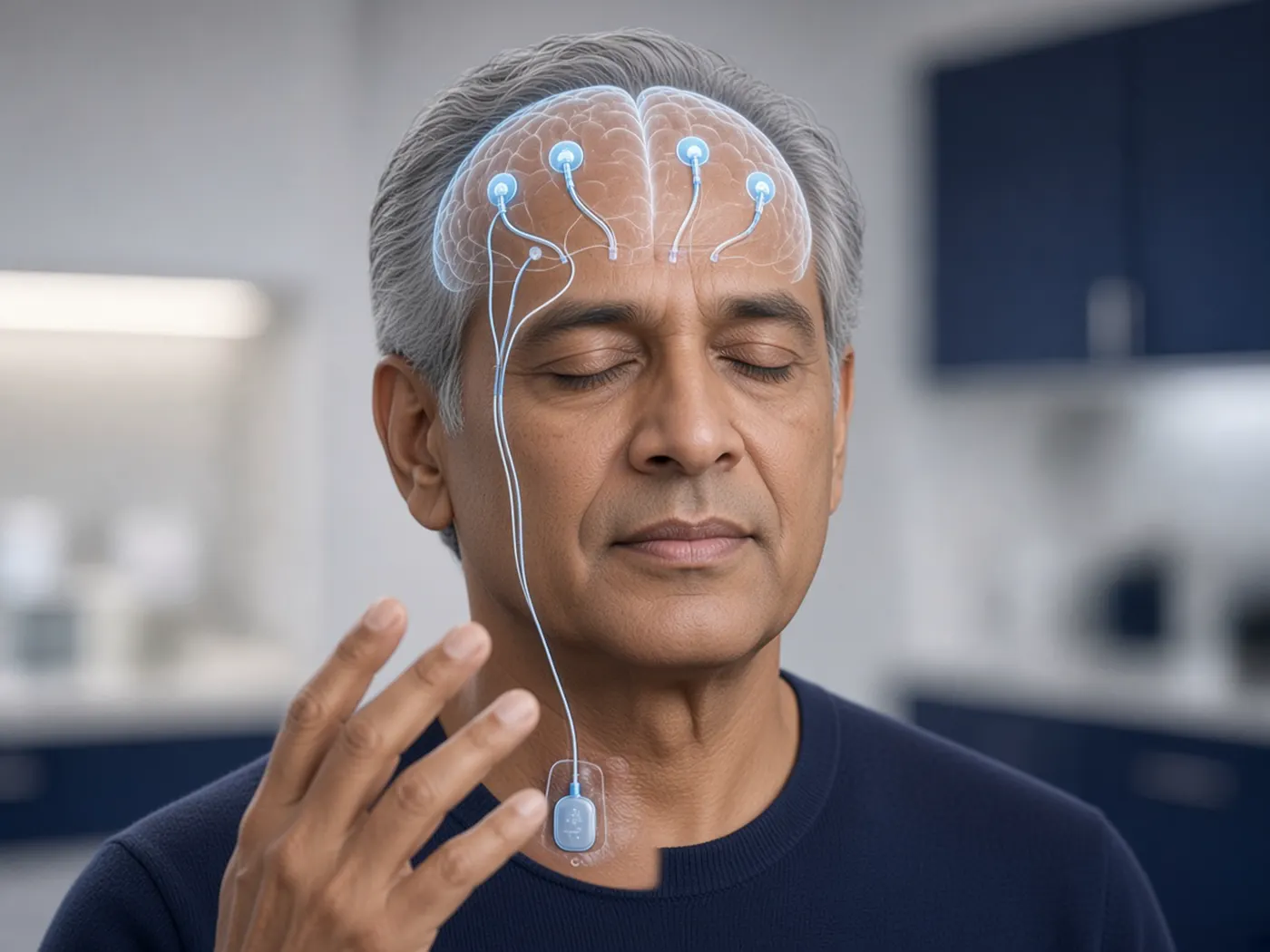
DBS is a treatment for selected symptoms, not a cure
Deep brain stimulation uses thin electrodes placed in a carefully chosen deep part of the brain, connected by a wire to a battery under the skin of the chest. The battery sends a steady electrical signal. People compare the battery to a heart pacemaker. The comparison is only about the device, not about the disease.
For Parkinson's disease, DBS is considered when tremor, stiffness, or sudden swings between too little movement and extra involuntary movement are no longer handled well by medicines. It does not stop Parkinson's from being Parkinson's. Most people continue medicines, usually at a lower dose. It does not treat every symptom. Balance, speech, memory, and blood pressure can stay difficult, and sometimes need extra care.
Talk to the clinic about this topic
Leave your name and mobile number if you want the clinic to call about the condition in this article. This is not a diagnosis.
The decision is shared with a neurologist
A movement-disorder neurologist and a neurosurgeon both need to agree that the person is a candidate. Tests look at how much the symptoms still respond to levodopa, at memory and mood, and at an MRI. Someone whose symptoms never responded to the right dose of medicine is often not helped by DBS either.
Dr. Deepak Kumar trained in stereotactic surgery and deep brain stimulation at Inomed, Germany. Training explains the method he uses. It does not mean every person with Parkinson's should have the operation.
What the days around surgery involve
The operation is planned with a frame or with navigation so the electrode reaches a target only a few millimetres wide. Part of the procedure is often done with the person awake so the team can check symptoms and side effects, though techniques vary. The battery is placed during the same admission or a staged one.
Afterwards there are programming visits. The settings are adjusted over weeks. The battery needs replacement years later, or sooner if it is used heavily. Risks that must be discussed in person include bleeding in the brain, infection, seizures, and a change in speech or mood. Families should hear those risks from the surgeon, not from a webpage.
How to start the conversation
Bring the neurologist's notes, a list of medicines and timings, and any MRI. If you live outside Gurgaon or outside India, an online consultation can tell you whether the file is enough for a useful opinion before you travel. Call 9871038709. There is no fee calculator for DBS on this website. The team quotes a personalised estimate only after they understand the plan.